When upgrading a bathroom, many homeowners will make changes for aging-in-place. Universal design is an interior design practice that keeps the aging and disabled in mind. These upgrades can make a big difference for your family over time. Making the bathroom safer for older or disabled family members can make a big impact on their well-being. This article will discuss universal design as it pertains to the bathroom.
Why Upgrade With Universal Design in Mind?
While you may not need these features in your bathroom right now, they can make life easier over time. Furthermore, universal design upgrades can often add resale value to your home. Whether you are planning for the future or looking to sell, upgrading your bathroom using universal design principles is often a good idea.
Grab Bars in the Bathroom
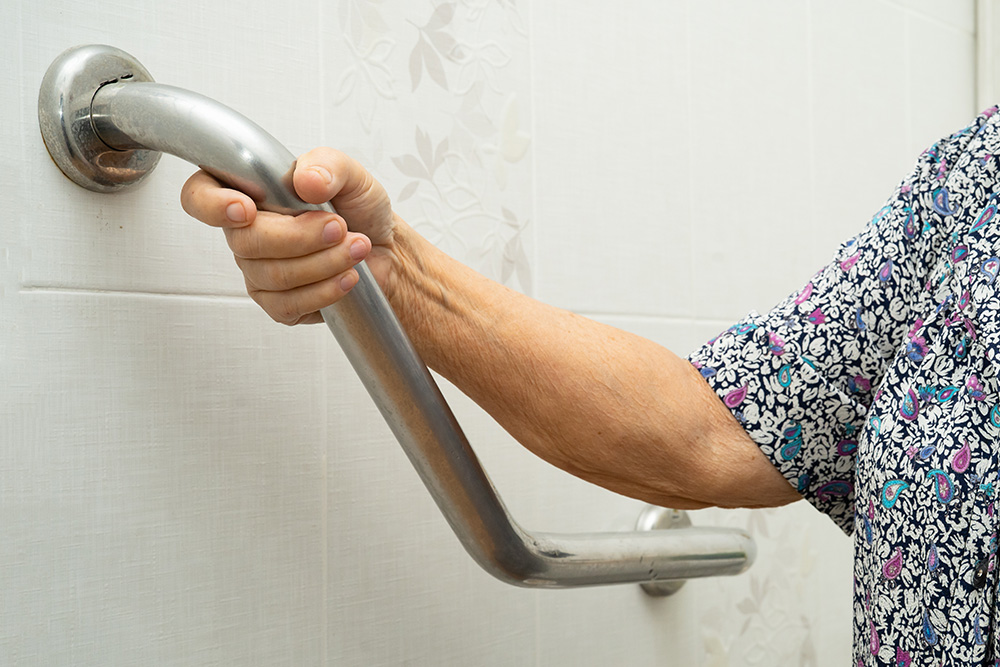
Stabilizing grab bars are often a simple upgrade to make in your bathroom. They can greatly benefit all members of the family. Grab bars make it easier and safer to use the bathroom. While most people think of the commercial-looking stainless steel grab bars in most public bathrooms, they can be highly customizable for your bathroom style. In fact, grab bars can come in a variety of styles, finishes, and materials, offering much more customization. Grab bars for assistance on and off the toilet are less common in homes than shower bars. But both can be important for older or disabled residents or guests. Grab bars should be installed properly, into the wall studs. This helps them be able to withstand 250-300 lbs of load.
Universal Shower Upgrades
Showers can be dangerous at any age. But slipping and falling in the shower can be particularly deadly for older adults. Built-in shower benches make washing your lower body easier. They can also be essential for those with mobility limitations. Handheld showerheads allow you to wash hard-to-reach places more easily. Curbless shower doors reduce the risk of tripping hazards when entering or exiting.
Universal Design for Bathtubs
Walk-in bathtubs take up less floor space while offering a safer bathing experience and have built-in seating. Walk-in tubs are taller and usually feature a built-in seat. These models are especially effective for older individuals and those with disabilities. This type of tub can also use less water than standard tubs of similar size.
If a walk-in tub is not for you, consider adding a transfer bench. A transfer bench helps an individual slide over the tub and ease themselves into the water. Look for models that are ADA-compliant.
Anti-Slip Tiling
Tiles are generally a good choice for bathroom flooring because of the consistent moisture. But they can also be slippery and hard if you fall onto them. As such, buying the right tiles can make a big difference. It is important to look for less slippery tiles. Tiles with a better coefficient of friction will be less slippery. Some tiles, such as quarry or terracotta tiles, are naturally less slippery. Other tiles may be treated to be more slip-resistant. Smaller tiles can also reduce the chance of slipping, as there is more grout per square foot. This provides more natural grip to the surface, whether barefoot, in socks, or in shoes.
Universal Design for Your Sink
While most bathroom vanities are around the right height for wheelchair accessibility, they often lack clearance below the counter. Floating or table-style counters allow for a wheelchair to be pulled in closer. This helps provide easier access for wheelchair users. Avoid deep or basin style, which can take up more space under the counter, or raise them higher than necessary.
Bathroom Cabinets
Universal design options for cabinets and drawers that are more accessible. The height of drawers and cabinets, as well as the types of handles used on them, can make a difference. The right combination of hinges, handles, and positioning can allow for easier access to storage regardless of hand dexterity, strength, or reach. For example, knob-style handles can be harder for those with arthritis to manipulate.
Accessible Lighting in the Bathroom
Proper lighting is important to a safe and accessible bathroom space. A well-lit bathroom is easier and safer to navigate. Rocker-style switches can make them easier for people of any accessibility level to use. When planning out lighting, consider how the fixtures will illuminate the interiors of cabinets and drawers. Adding lights above shower spaces can also limit tripping hazards when entering or exiting.
Safe Harbor Healthcare Services does not provide medical, healthcare, or financial advice via articles. This material has been prepared for informational purposes only. It is not intended to provide and should not be relied on for advice.
Safe Harbor Healthcare Services has provided excellent home care on Staten Island since 1967. Our services help older and disabled individuals live safely and independently while giving their families the peace of mind they need. For more information, contact us or call (718)-979-6900.