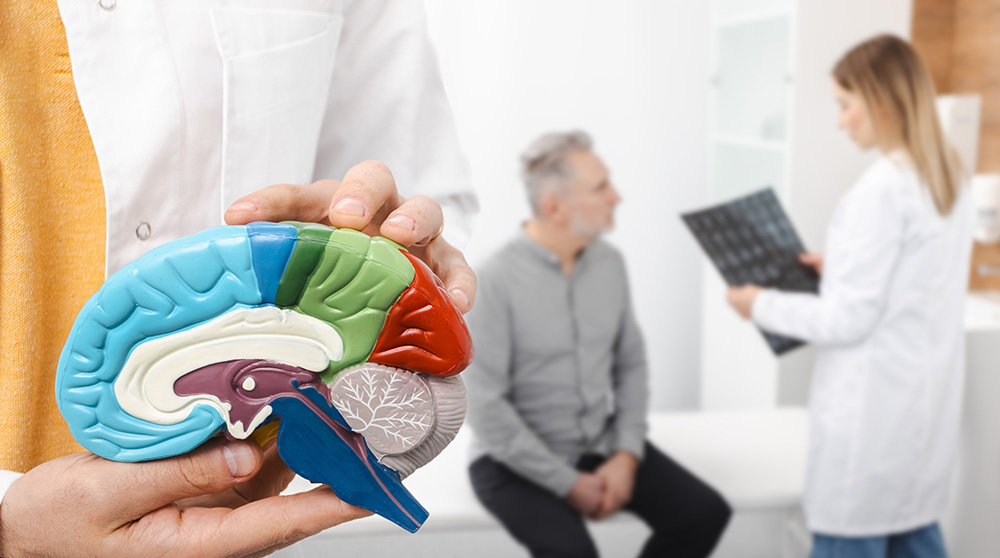
Strokes are one of the leading causes of death in the US. Almost 800,000 strokes occur in the US each year, according to the CDC. The risk of having a stroke can increase as you age. For the safety of you and your loved ones, it is important to know the signs of a stroke so you can act quickly if one occurs. For families of older loved ones, understanding the signs of a stroke can mean the difference between life and death in some emergencies.
What is a Stroke?
A stroke is a sudden interruption of blood flow to the brain. Generally, most strokes are caused by an artery blockage from the heart to the brain. However, there are other potential causes. They often depend on the type that is occurring. You can find more info on the different types of strokes below. A stroke will generally happen rapidly, and medical intervention is needed as soon as possible. Acting quickly can make a big difference. On average, those who receive emergency care within 3 hours of having a stroke will have a better overall outcome than those who don’t.
Stroke Signs: FAST Acronym
One of the most widely accepted methods of identifying a stroke is FAST, which stands for Face drooping, Arm weakness, Speech, and Time to call. FAST is taught by the National Stroke Association and the American Heart Association.
Face Drooping
During and after a stroke, you may notice the individual’s face drooping. It is common for this drooping to affect only one side of the face, but it may affect both. They may also experience numbness in their face. One way to be sure is to ask the person to smile. They may not be able to lift both sides of their mouth into a smile.
Arm Weakness
One arm (generally on the same side as the facial droop) may weaken or become numb. Try asking the individual to raise their arms. The arm on the affected side may drift downward, or may not move as easily. In some cases, they may not be able to lift the affected arm at all.
Speech
The individual’s speech might become slurred and/or difficult to understand. Ask the individual to repeat a simple phrase. Garbled or slurred speech when repeating the phrase should be a red flag. They may even mix up the order or switch words out for those that don’t make sense.
Time to Call
Call 911 immediately. Even if the signs fade over time, you should still contact emergency services. If possible, note the time that you notice the symptoms starting, so that the first responders and doctors have an accurate account of when the stroke occurred.
Types of Stroke
There are three types of strokes. While the main signs and symptoms remain the same, the severity of the stroke can differ. A medical professional will be able to determine the type of stroke an individual had with proper testing and evaluation in the hospital. Medical attention is needed regardless of the type and should be given as soon as possible.
Ischemic Stroke
This is the most common type. About 80% of all strokes are Ischemic Strokes. This type of stroke occurs when a clot or other blockage prevents blood flow through an artery to the brain. This blockage can cause brain cells to die as they cannot get oxygen or other nutrients. Bad cholesterol is one of the most common causes of Ischemic Stroke. This is because cholesterol deposition can narrow your arteries.
Intracerebral Hemorrhage
An Intracerebral Hemorrhage means that an artery in the brain has ruptured. This causes blood to compress the brain’s structure. As blood leaks within the brain, the pressure will continue to build. The pressure, combined with internal bleeding, can be a seriously dangerous combination. This condition can lead to unconsciousness or even death. High Blood Pressure (Hypertension) is the most common cause of this.
Subarachnoid Hemorrhage
This type of hemorrhagic stroke happens if an artery ruptures near the brain. This can cause immediate and intense headaches, nausea, and vomiting. This type is most often caused by abnormalities of the arteries at the base of the brain. This is also known as a cerebral aneurysm. The cause of cerebral aneurysms is not fully known, but they can occur at any age.
Additional Stroke Symptoms
There are many other common stroke symptoms, but they are often not as easily identifiable as those in the FAST model. Dizziness and overall loss of balance or coordination can be common in most stroke victims. Numbness, especially along one side of the body, is one of the first signs the victim might notice themselves. Blurred vision or trouble seeing can also be a sign of stroke, especially in just one eye.
Because strokes happen in the brain, headaches are a common symptom that stroke victims suffer from. Many stroke victims report that these sudden, severe headaches are more painful than any migraine they have had before.
Safe Harbor Healthcare Services does not provide medical, healthcare, or financial advice via articles. This material has been prepared for informational purposes only. It is not intended to provide and should not be relied on for advice.
Safe Harbor Healthcare Services has provided excellent home care on Staten Island since 1967. Our services help older and disabled individuals live safely and independently while giving their families the peace of mind they need. For more information, contact us or call (718)-979-6900.