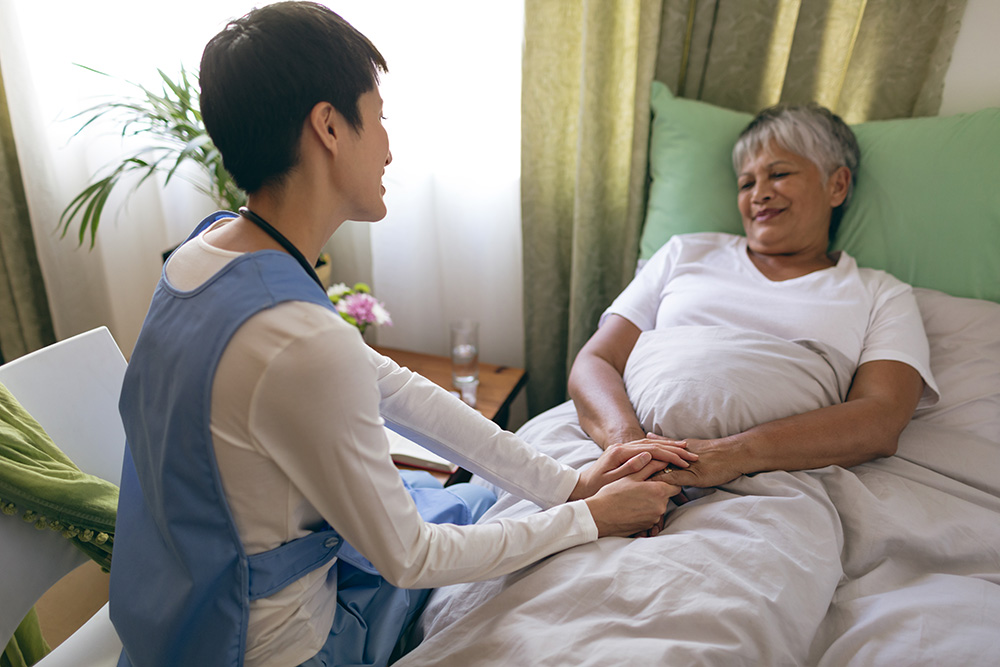
If your older or disabled loved one has become bedridden, there are several important aspects of their care that you will need to be aware of. Bedridden individuals need specific, tailored care to help prevent complications like bedsores and improve health outcomes. Below, we will discuss care needs for older individuals who are bedbound or bedridden.
Defining Bedbound and Bedridden
When referring to individuals who are stuck in bed, you may have heard these two terms before. And in conversation, they are often used interchangeably. But for medical purposes, they have different definitions. Bedbound generally refers to a condition where the individual is mostly stuck in bed, but may have some mobility for simple tasks. They may still require help to get in or out of bed. ”Bedridden” generally refers to a severe, permanent condition where mobility is incredibly limited.
What Causes Someone To Be Bedridden?
Except in the case of a severe injury or accident, people don’t usually become bedridden overnight. Several factors for an individual’s health can contribute to their reduced mobility, which can leave them stuck in bed. Chronic conditions, especially in late stages, such as cancer or renal disease. Neurological disorders, like Parkinson’s, can limit mobility, leaving someone bedridden. Age and the frailty it brings can also be a factor. Weakening muscles, frailer bones, and arthritis can affect one’s ability to get out of bed.
Severe mental or psychological factors can also be at play. Extreme depression or anxiety can be physically exhausting. Declining mental health as a result of age or health conditions can be common. And the added weight of declining emotional health can make it harder for individuals to want to leave the bed.
Accidents/Post-Op
In the event of a severe accident or after a major surgery, an individual may be temporarily or permanently bedridden. While these individuals may not have co-morbid reasons for being bedridden, the quality of care can still be important. Proper care for bedridden individuals with injuries can be important to recovery. Some major surgeries, especially those addressing major health issues or injuries, can still leave someone bedridden or bedbound for months.
Areas of Care for Bedridden Individuals
Generally, care for bedridden individuals focuses on two main areas: what caused them to be bedridden, and complications of being supine long-term. There are several important conditions that proper care can prevent in bedridden patients.
Bedsores
Bed sores, or skin ulcers, occur when blood pools under the skin from long-term pressure. It most often occurs on bony areas, like the ankles, wrists, and hips. Bedsores can be prevented by helping your loved one reposition periodically to lessen pressure in the same areas. Good hygiene and barrier creams can also help reduce the risk of skin ulcers
Muscular Atrophy
Immobility and inactivity cause muscles to weaken. A bedridden individual will continue to lose muscle mass in areas of the body that are not being used. Caretakers can help with minor exercises where possible to help maintain muscle strength.
Respiratory Issues
Supine positions for long periods of time can also cause complications for the respiratory system. Pneumonia can be a complication that can compromise the overall health and well-being of your loved one. Fighting off a pneumonia infection can be overwhelming for those who are already facing life-threatening health concerns. In more extreme cases, atelectasis can occur. This is the partial collapse of lung tissue, leading to blocked airways and difficulty breathing.
UTIs
Urinary Tract Infections can be a lot more life-threatening for a bedridden individual. Being bedridden leads to a higher risk of developing a UTI, for several reasons. Complications with catheters, dehydration, and not being able to fully empty the bladder can all occur when stuck in bed.
Mental Health Concerns for Bedridden Individuals
When bedridden, declining mental health is a likely occurrence. Bed confinement and declining physical health can lead to increased feelings of depression, anxiety, and isolation. As worsening mental health can negatively impact physical health outcomes, keeping your loved one’s emotional well-being in mind when providing care is essential.
Find ways to make your loved one happier, more comfortable, and more at peace with their situation. Even small changes can go a long way. When possible, schedule visits from loved ones to keep them company. During the day, Natural lighting from outside can help boost mood. When they want, put on their favorite music, or let them watch their favorite shows or movies.
In-Home Care for the Bed Confined
A loved one who is stuck in bed can require constant care. Making sure they are comfortable and their needs are met may be hard to do alone. Whether your loved one is permanently bedridden or recovering from a major surgery, consider hiring in-home care assistance. A certified Home Health Aide from Safe Harbor can help your loved one with their daily care needs from the comfort of their home. We work with your family as a team, allowing your loved one to receive care throughout the day. Our aides can help guide family members to ensure that your loved one’s care needs are met.
Safe Harbor Healthcare Services does not provide medical, healthcare, or financial advice via articles. This material has been prepared for informational purposes only. It is not intended to provide and should not be relied on for advice.
Safe Harbor Healthcare Services has provided excellent home care on Staten Island since 1967. Our services help older and disabled individuals live safely and independently while giving their families the peace of mind they need. For more information, contact us or call (718)-979-6900.